A full house rewire in Barnsley usually costs £4,000 to £7,000 and takes 5 to 10 days. It replaces the cabling, sockets, switches and lighting, and normally the consumer unit, then finishes with full testing and an Electrical Installation Certificate. This guide covers the warning signs, each stage of the work and whether you need to move out.
Looking to book? See our full house rewires in Barnsley.
A full house rewire is one of the biggest electrical jobs a homeowner can take on, but for many older properties across Barnsley and surrounding areas it's also one of the most necessary. Outdated wiring isn't just an inconvenience. It's a genuine fire risk. Harrison Bell personally carries out every rewire from first fix to final certificate, and this guide shares the straightforward information you need before making a decision.
Why Does House Wiring Need Replacing?
All electrical wiring degrades over time. The insulation around cables becomes brittle and cracks, connections loosen, and materials that were acceptable decades ago no longer meet today's protection standards. Wiring installed in the 1960s or 70s was fitted to standards that have since been replaced several times.
This isn't just a compliance issue. Faulty wiring is a real cause of house fires in the UK, and a rewire is about protecting the people who live in the property, not just ticking a box.
Warning Signs Your Home May Need a Rewire
Many of the properties we work on show one or more of these signs before the owner realises how far things have gone:
- Flickering lights: especially when the kettle or washing machine comes on, which often points to an ageing circuit struggling with modern demand.
- An old fuse box: a wooden back or rewirable fuses are among the clearest signs, and mortgage providers and insurers often flag them.
- Small shocks from switches or appliances: this usually means a fault in the earthing or failing insulation and should never be ignored.
- Warm sockets or a burning smell: a genuine fire risk, so stop using whatever is affected, switch it off at the consumer unit if safe, then call.
- Frequent tripping: recurring trips can be a sign the wiring has deteriorated. For landlords, it's also a compliance issue.
- Old cables and sockets: rubber, fabric or early PVC insulation, or round-pin sockets.
- C1 or C2 codes on an EICR: both need remedial work, and a rewire is often better value than patching faults one by one.
Full Rewire vs Partial Rewire
A full rewire replaces every circuit from the consumer unit through to every socket, switch and light fitting. It's needed when the overall wiring is beyond repair, when the materials can no longer be made safe, or when the property is being fully renovated.
A partial rewire targets specific circuits or areas, such as an extension, a new shower circuit or one part of the house where an EICR found problems.
Harrison will always give you an honest assessment after inspecting the property. We won't recommend a full rewire when a partial one is enough, and we won't patch a system that needs replacing properly.
Worried About Your Wiring?
Harrison will look at the installation and give you an honest answer. Call him on 07931 845340 for a free quote.
Call for a Free QuoteWhat Does a Full House Rewire Involve?
- Survey and quote: Harrison visits to assess the installation, the scope of work and access to floors and ceilings. You get a clear written quote within 24 hours.
- Preparation: the supply is isolated, the old circuits are disconnected and the old consumer unit comes out. Moving any furniture is agreed in advance.
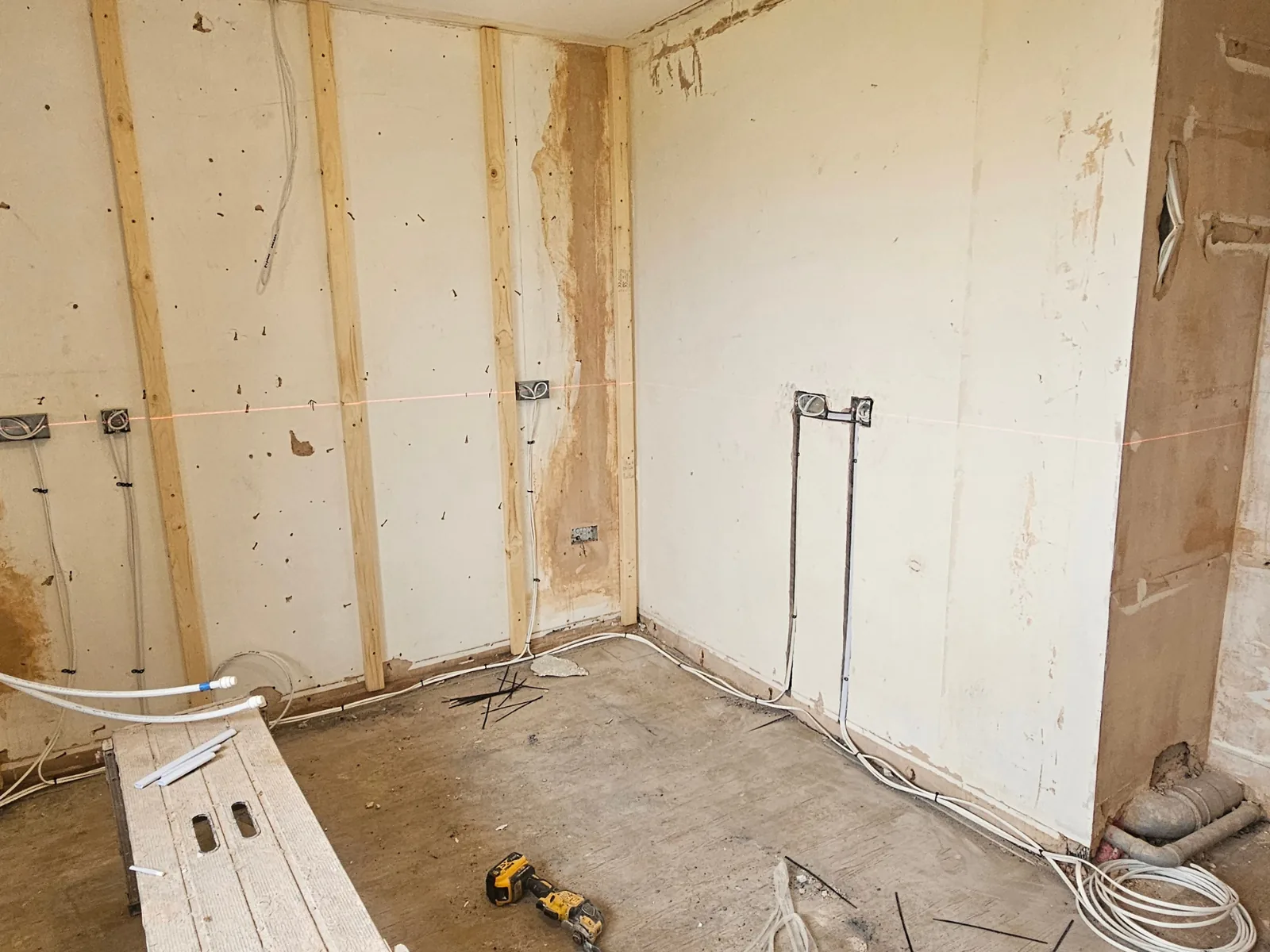
- First fix: new cables are run through ceiling voids, under floors and through walls. Where cables are chased into plaster, the plaster will need making good afterwards.
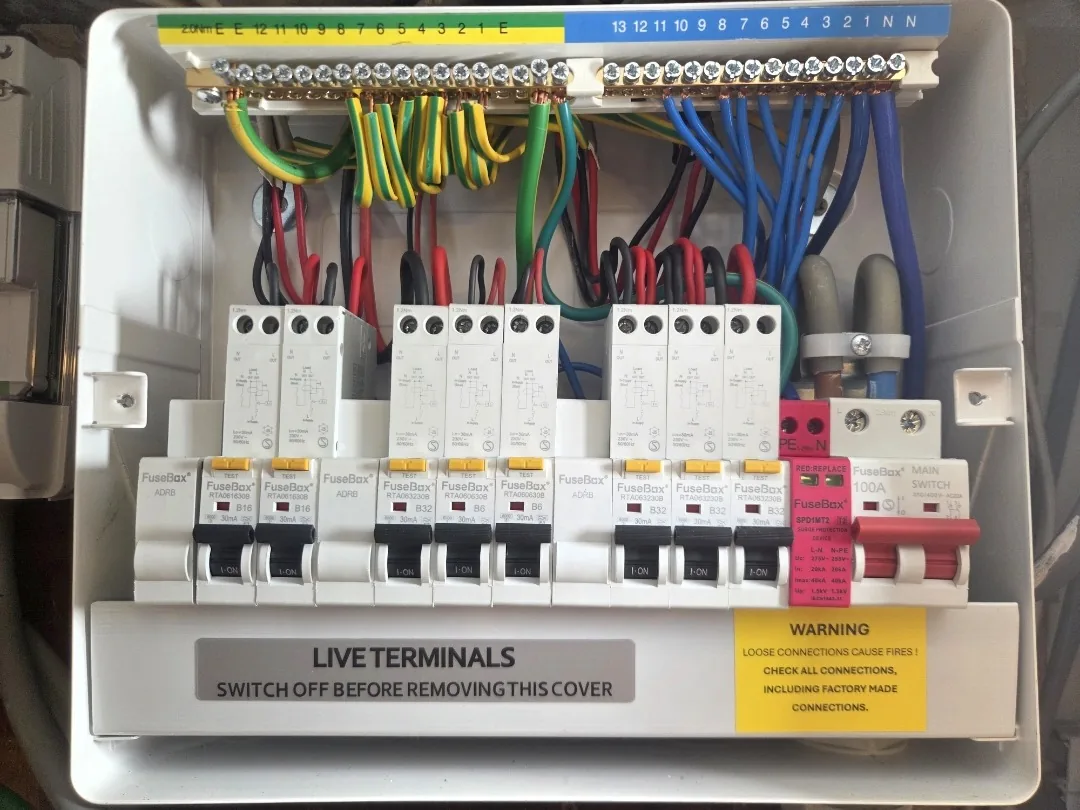
- Consumer unit: a modern board with an RCBO for each circuit is fitted, so a fault on one circuit doesn't affect the rest of the house.
- Second fix: sockets, switches, light fittings and any additional circuits are fitted and connected.
- Testing and certification: the whole installation is tested to BS 7671 and you receive an Electrical Installation Certificate, which you will need for insurance and any future sale. Building control is notified as required.
How Long Does It Take and What Does It Cost?
Most domestic rewires take between 5 and 10 days, depending on the size of the property and how easy the cable routes are to reach. You will get a realistic timeline before any work begins.
Most rewires cost between £4,000 and £7,000, depending on the size, age and condition of the property and whether it's occupied. All quotes include testing and certification, and any extra work is discussed and agreed before it's carried out.
Do I Need to Move Out During a Rewire?
It depends on the property and how the work is managed. Most people can stay at home, particularly if the job is done room by room and the power is only off during working hours. If the property is being stripped back for renovation, or you have young children or other specific needs, moving out can be more practical. We will talk through what suits you during the survey.
Frequently Asked Questions
Probably, in some areas. Running cables through walls usually means chasing into the plaster, which needs making good afterwards. We discuss the likely impact during the survey, and many homeowners time a rewire to fit with wider redecoration.
Standard policies don't usually cover the cost of a rewire, as it's treated as maintenance. If faulty wiring ever causes a fire, your insurer may ask for evidence of the installation's condition, so an up-to-date EICR or rewire certificate helps protect your position.
Yes. In a full rewire, the old consumer unit is normally replaced as part of bringing the installation up to current standards.
Not necessarily. But if a buyer asks for an EICR and it comes back with C1 or C2 codes, you may be asked to carry out remedial work before exchange. For older properties, it's often worth getting an EICR before marketing the house.
We serve Barnsley, Sheffield, Rotherham, Wakefield, Birdwell, Dodworth, Worsbrough, Hoyland, Darton, Mapplewell, Penistone, Chapeltown, Wombwell, Royston, Stairfoot, Tankersley and the surrounding villages. Call or WhatsApp 07931 845340 to check your area.